
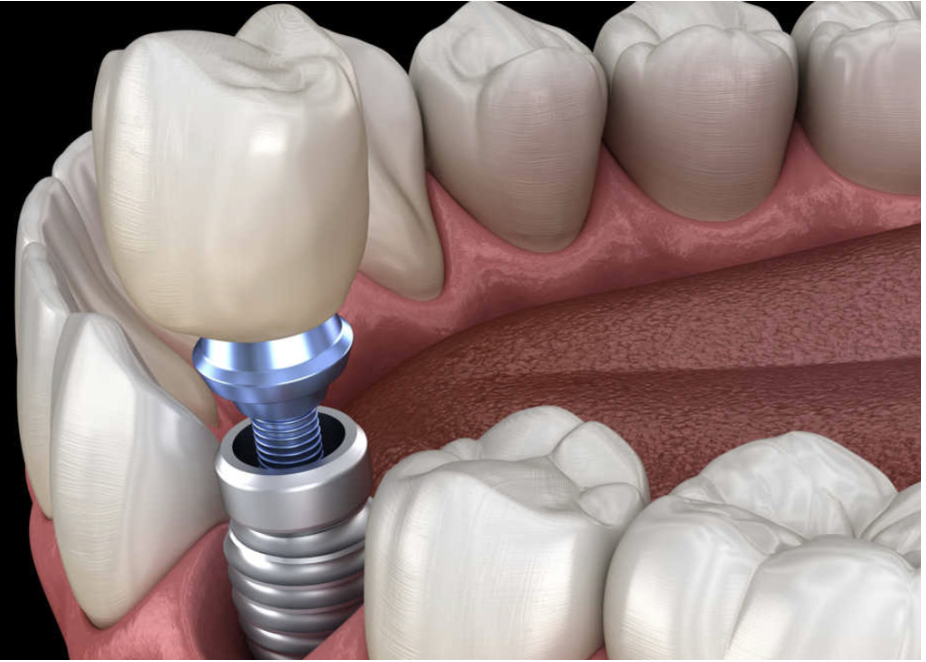
Dental implants have been used for over 60 years to replace missing teeth, either as single units or as part of dental bridges. The most common material is titanium alloy, which has been scientifically studied since implants were first introduced into clinical practice. When preparing reports on causation and prognosis, I am frequently asked the
following questions:
- How long is this implant likely to last?
- Can the claimant reasonably claim the cost of future replacement implant crowns?
- If so, how many replacements should be allowed for over a lifetime?
It is well recognised that a natural tooth can last a patient’s lifetime if they have a clear medical history, good oral hygiene, and good dietary control. Conversely, patients who do not look after their teeth may suffer premature tooth loss due to decay or periodontal disease.
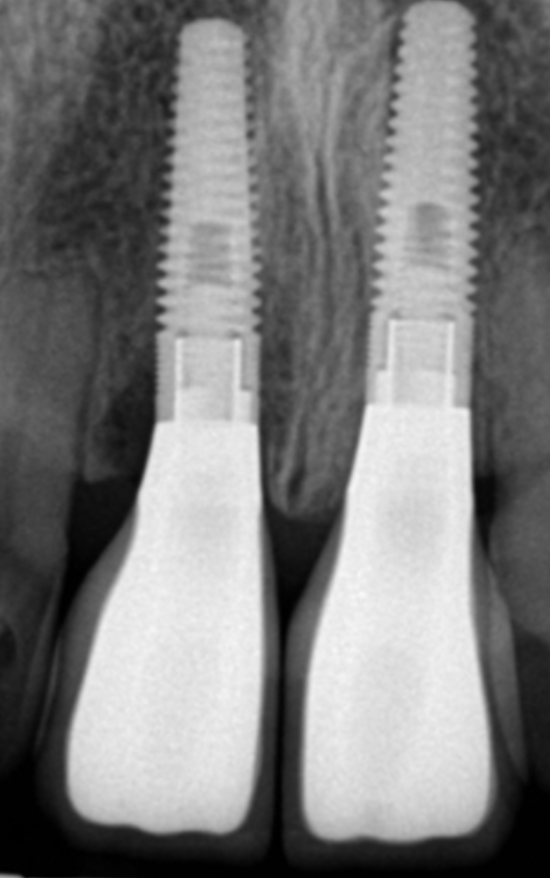
These individual factors must be taken into account when preparing cost reports for claimants. It is the responsibility of the dental expert to review the claimant’s dental history prior to the accident and assess whether the lost tooth would reasonably have been expected to last for the claimant’s natural lifetime.
Although implants have been used for many decades, there are relatively few long-term studies with sufficiently large patient numbers to provide consistent evidence regarding true implant longevity. Most published studies last between 5 and 15 years and typically involve smaller patient cohorts, which limits the strength of the conclusions that can be drawn.
Many scientific studies are retrospective and are often carried out by the clinician who placed the implants, usually within specialist practices where standards of placement and aftercare are higher than in general practice. This may not reflect everyday clinical reality.
Ideally, a robust scientific study assessing implant longevity would include a large number of patients, a large number of implants placed by multiple operators, and long-term follow-up of at least 10–15 years. Unfortunately, most available studies fall short of this ideal, meaning that we cannot state with
certainty how long all implants will last, even when well maintained.
Review of a Major Long-Term Study
One of the largest published studies reports over 22 years of follow-up and includes nearly 11,000 dental implants:
“Long-term clinical performance of 10,871 dental implants with up to 22 years of follow-up: A cohort study in 4,247 patients” – D. French et al.
This was a retrospective longitudinal cohort study of implants placed by asingle specialist periodontist between 1995 and 2019.
- Total implants: 10,871
- Total patients: 4,247
- Maximum follow-up: 22.2 years
- Mean follow-up: 4.5 ± 4.2 years
Risk Factors Identified
The study reported higher implant failure rates in the following groups:
Patients with multiple implants compared to single implants
- Heavy smokers
- Patients with diabetes
- Implants placed in grafted bone
- Short implants (6 mm or less)
- At first reading, this study may give the impression that implants can reliably last up to 22 years or more. However, there are important limitations:
- All implants were placed by a single specialist operator, which is unusual in routine implant dentistry and may overestimate success rates.
The average implant follow-up period was relatively short (mean 4.5 years), meaning that relatively few implants were actually observed for 15–20 years.
Actual Survival Versus Predicted Survival
The reported cumulative implant survival rates were:
- 3 years – 98.9%
- 5 years – 98.5%
- 10 years – 96.8%
- 15 years – 94%
Cumulative survival represents a statistical estimate of the probability that an implant survives to a given time point, based on all available data.
Although the maximum follow-up extended to over 22 years, the study does not clearly report how many implants were actually observed beyond 15 years. Many implants may only have been followed for a short period.
The study used Kaplan–Meier survival analysis, which: Counts every failure event when it occurs. Treats patients who have not yet failed (or who are lost to follow-up) as “censored” rather than failures.
Continuously updates survival probability over time. As long as some implants remain under observation at later time points, the model can calculate long-term survival estimates, even if most implants were followed for much shorter periods. This can result in optimistic projections of long-term survival.
Wider Published Evidence
Other studies have reported that:
- Dental implants are not 100% successful and there is a risk of failure within 10–15 years, commonly due to peri-implantitis. Removal of a failed implant can be traumatic and may result in significant bone loss. Subsequent replacement implants may need to be placed under more difficult clinical conditions (Setzer and Kim).
- All restorations require replacement cycles over a patient’s lifetime (Holm-Pedersen).
My Opinion
Based on the available evidence and my own clinical experience:
- A single implant can reasonably be expected to last between 10 and 20 years, depending on patient risk factors and maintenance.
- Implant-supported bridges are more difficult to keep clean and are subjected to increased loading due to additional pontic teeth. Their expected lifespan is therefore typically 10 to 15 years.
Having carried out implant surgery for over 30 years, my experience is that some implant failures can occur early. Once an implant has successfully integrated however, many remain functional for 20 years or more, although gradual bone loss and implant exposure can occur over time.
For the purpose of costing future treatment:
- I generally allow for replacement every 20 years in patients without significant risk factors.
- In patients with increased risk (for example diabetes, periodontal disease, smoking history), I apply a more cautious 15-year replacement cycle.
This approach reflects both the published evidence and real-world clinical experience.